V Rising Route Database
Reviewed on August 17, 2026. Use this lane when the question is less about the reward category and more about how the run should be shaped: which lane to enter, how wide to go, when to turn back, and whether travel rules change the plan.
9 route-side entries
This lane groups Route and Travel rows so movement logic, entry lanes, and haul-return constraints stay visible together.
Best use case
Start here when the route shape itself feels risky, even if the boss or material target already seems correct.
Why this lane matters
Many bad sessions come from overextending a decent target. Route rows help narrow the path before the player commits.
Open route rows
Jump straight to the route-only view of the full database.
Start from lane shape, not from category size
These are the route-side views most likely to save a run from turning messy for avoidable reasons.
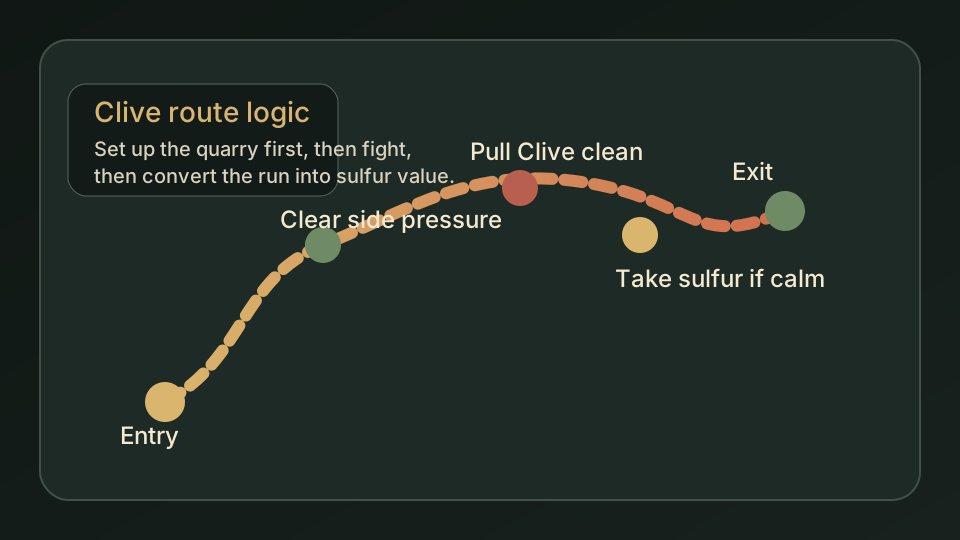
Route approach rows
Best when one safe approach matters more than broader progression theory.
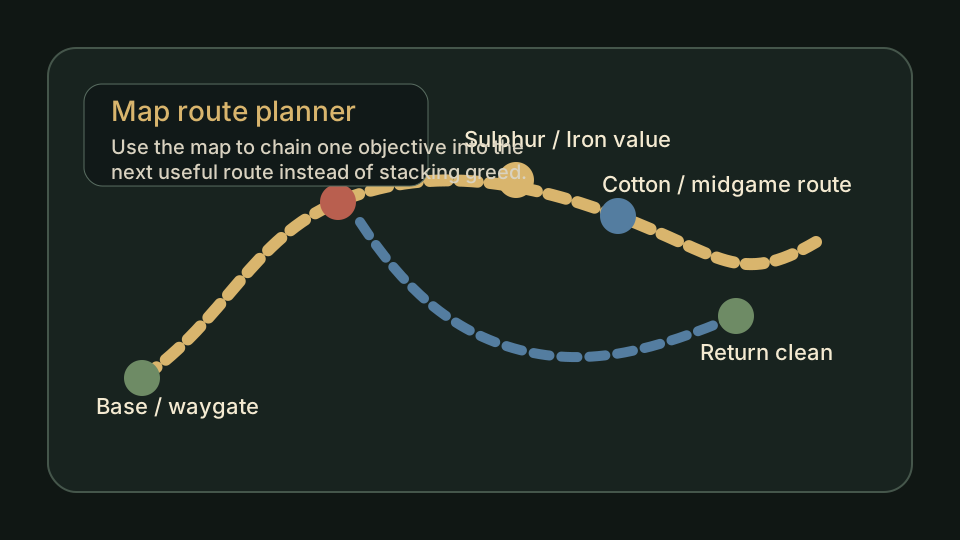
Travel and haul rows
Best when movement rules, return pressure, or Waygate limits are the real bottleneck.
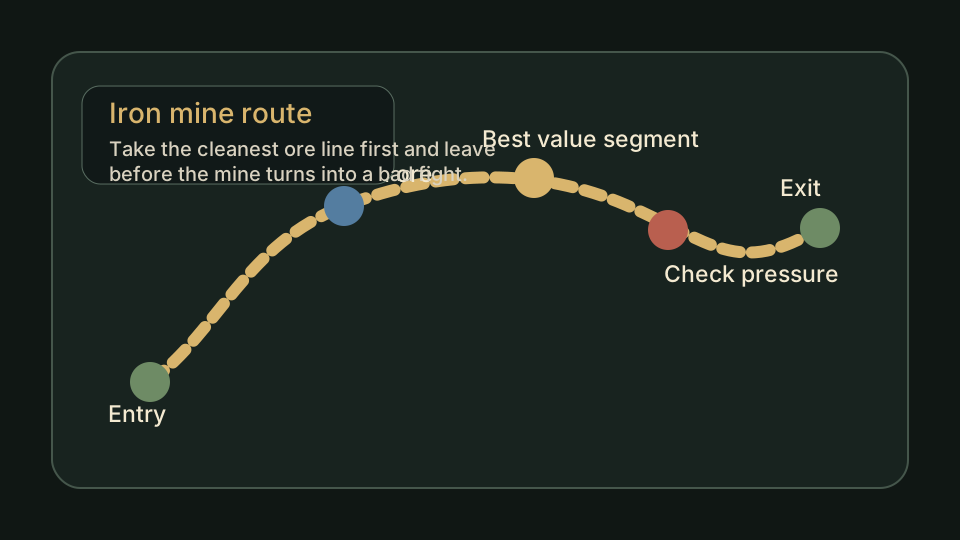
Risk comparator
Best when two route ideas both sound plausible and you need one recommendation instead of one more list.
| If the problem is... | Open first | Why |
|---|---|---|
| getting into the area cleanly | Route rows | These rows are best at lane shape, entry timing, and where a run starts tightening. |
| bringing the haul home safely | Travel rows | Travel rows keep haul rules and fast-travel limits visible instead of hiding them inside broader pages. |
| two routes sound close but one is probably greedier | Route Risk Comparator | The tool is stronger when the route choice needs side-by-side risk and payoff framing. |
| the route still feels under-proven | Review Queue or Visual Coverage | Those pages say whether the remaining doubt is a live test gap or a proof gap. |
What should trigger a route re-check before a player trusts the run
Route pages feel maintained when they explain what changed, what stayed stable, and what should make a player pause. That is how this lane becomes a reusable planning surface rather than a loose stack of travel notes.
Re-check after travel-rule drift
If movement restrictions, haul handling, or fast-travel assumptions changed, the lane should be treated as a decision screen, not a final answer. That is when Updates and the linked travel guide matter more than another skim of route summaries.
Re-check after greedy failures
When the player keeps losing the run on the way out, the lane is doing its job if it pushes them toward narrower route rows, checklist tools, or turn-back logic. The value is not just that a route exists, but that one shape is safer for this stage.
Leave the lane once shape is clear
As soon as the better entry lane, haul size, and return plan are obvious, the lane should disappear from the workflow. The next page should be a guide, comparator, or checklist that supports execution.
Eight route-chain rows now feed the database layer
These rows make route decisions reusable. They connect entry lanes, haul timing, recovery, proof priority, and patch-sensitive route checks into the same database layer used by the filters.
| Database row | First decision | Why this is useful now |
|---|---|---|
| Safe entry lane chain | Which side to enter from before the objective starts | Helps players stop losing value before the boss, mine, or farm route even begins. |
| First bankable haul chain | When the run has already paid off enough to leave | Turns route success into a stop rule instead of a greed trap. |
| Boss plus resource overlap chain | Combine boss and material value or keep the trip smaller | Prevents a clean boss win from becoming an overextended resource sweep. |
| Haul-home travel rule chain | Waygate, return lane, base distance, or route shrink | Shows when the real blocker is getting home, not finding the target. |
| Short-session route chain | One useful objective when time is limited | Helps a short play window produce a real result instead of half-finishing a broad plan. |
| Recovery after failed run chain | Retry, downshift, bank progress, or switch routes | Keeps a failed run from becoming the same failed run again. |
| Proof-priority route chain | Which route needs a real screenshot first | Connects route maintenance to public proof priority instead of hidden editorial judgment. |
| Patch-sensitive route chain | Trust old route advice or recheck after changes | Keeps old route confidence from drifting after patch, server, or mod changes. |
Route Risk Comparator
Use it when the lane is chosen but the safer versus greedier option still needs ranking.
Run Prep Checklist
Use it once the route is chosen and you want the actual pre-run guardrails.
Waygate guide
Open the guide when travel rules—not the destination—are the real reason the run feels bad.
Patch status
Use Updates first if a patch may have changed travel limits or route confidence.
This lane is about route shape, not total certainty
The route lane is valuable because it isolates the movement problem from the category problem. It can show that the next mistake is usually overextending, carrying too much, or entering from the wrong side. It still does not replace the linked guide's patch note, proof state, or page-level exception handling.
If you already know the better route and only need a run checklist, leave the lane and open the prep or recovery tools. The database lane is best at narrowing, not at doing every next job itself.